
The evolution and optimization of Biohacking technologies
Do you dream of multiplying your cognitive performances, improving your recovery, or better understanding your body’s signals thanks to technology? Biohacking technologies, at the crossroads of digital innovation and biological optimization, offer concrete solutions to transform your daily life through wearables, neurofeedback devices, or advanced measurement tools. Discover in this article how this technological revolution, driven by players like Neuralink, Oura Health, and WHOOP in a market estimated at $109.46 billion by 2029, is redefining our approach to personal health and well-being.
Definition and evolution of biohacking technologies
Biohacking technologies refer to the entire set of digital tools and connected devices that allow measuring, analyzing, and optimizing human biological functions. This technological approach encompasses physiological tracking wearables, neurofeedback devices, tracking applications, and stimulation tools to improve physical and mental performance in a personalized and data-driven manner.
The technological evolution of biohacking has accelerated since 2020, moving from rudimentary tools to sophisticated devices powered by artificial intelligence. The growing availability of portable health trackers, genetic test kits, smart devices, and applications allows individuals to monitor and analyze their biometric data, creating a more personalized and data-focused approach. This technological democratization transforms biohacking into an accessible science integrating sensors, algorithms, and real-time feedback.
The main categories of biohacking technologies

Wearables and physiological tracking devices
Wearable technologies are the cornerstone of modern biohacking, allowing continuous monitoring of vital parameters. These devices measure heart rate variability (HRV), sleep quality, physical activity, and stress markers to optimize health and performance based on objective data rather than subjective impressions.
Among the most high-performing tracking devices, the Oura Ring stands out as a connected ring offering medical-grade precision to measure sleep, recovery, body temperature, and heart rate variability. The WHOOP Strap revolutionizes sports training by analyzing workload, recovery, and sleep, while the Fitbit and Garmin watches democratize activity tracking with integrated heart monitoring. For stress management, the HeartMath HeartRate optimizes heart coherence, whereas the Muse Headband uses EEG for guided meditation. Advanced sensors like BioStrap analyze oxygenation and biomechanics, complemented by Levels CGM which revolutionizes nutritional optimization through continuous glucose monitoring, even for non-diabetics.
These wearables transform the body into a personal laboratory, generating terabytes of biological data. Analyzing this information allows identification of personal patterns, adjustment of daily routines, and prevention of imbalances before they affect health or performance.
Neurofeedback and brain stimulation devices
Home neurofeedback and brain training devices like Apollo Neuro and Sensai are becoming extremely popular within the biohacking community, paving the way to accessible neurocognitive optimization.
In the field of neurostimulation, the Apollo Neuro developed by neuroscientists delivers gentle vibrations to improve sleep and heart rate variability, while Narbis offers gamified EEG glasses to optimize concentration and attention. The Flow Neuroscience headset uses transcranial stimulation to treat depression and enhance mood, whereas Halo Sport accelerates motor learning through electrical neuropriming. For anxiety and pain management, Alpha-Stim combines electrical stimulation and insomnia reduction, complementing the offering with NeurOptimal for dynamic brain performance optimization and Sensai as a brain-computer interface for advanced cognitive training.
These devices act on neuroplasticity by modulating brain electrical activity, allowing improvement of concentration, memory, and stress management. Targeted stimulation of specific brain regions or modulation of the autonomic nervous system creates lasting adaptations to optimize cognitive performance.
Mobile applications and analysis platforms

Tracking and data analysis ecosystems
Biohacking applications transform raw sensor data into actionable insights. These platforms use artificial intelligence to identify correlations between habits, biomarkers, and performance, creating personalized recommendations based on the analysis of millions of data points.
The most sophisticated analysis platforms include:
| Platform | Main features | Specialization |
|---|---|---|
| HRV4Training | HRV analysis, personalized coaching, recovery prediction | Sports training optimization |
| Cronometer | Detailed nutrition tracking, micronutrient analysis | Precision nutrition |
| MyFitnessPal Premium | Calorie counting, macros, correlations with biomarkers | Weight management and performance |
| Sleep Cycle | Sleep phase analysis, smart alarm, long-term trends | Sleep optimization |
| Strava Premium | Sports performance analysis, training zones, recovery | Athletic performance |
| Welltory | Multi-sensor aggregation, lifestyle-biomarker correlations | Holistic health view |
| Elite HRV | Advanced HRV analysis, scientific protocols, coaching | Recovery science |
These applications exploit machine learning algorithms to detect subtle patterns impossible to identify manually. By correlating sleep, nutrition, stress, and physical activity, they reveal the most effective optimization levers for each individual.
Artificial intelligence and personalized recommendations
Artificial intelligence is revolutionizing biohacking by analyzing millions of physiological data points to generate ultra-personalized recommendations. These adaptive systems continuously learn from individual reactions to interventions, refining their suggestions to maximize the effectiveness of biohacking practices.
Artificial intelligence now incorporates advanced functionalities revolutionary for modern biohacking. Recovery prediction uses sophisticated algorithms analyzing heart rate variability, sleep quality, and training load to anticipate future performance with remarkable precision. Nutritional optimization relies on AI to recommend personalized dietary adjustments based on blood glucose, energy levels, and specific individual goals. Circadian coaching exploits intelligent systems optimizing light exposure, body temperature, and physical activity according to each user’s unique chronotype. Early anomaly detection identifies subtle deviations in biomarkers before manifest symptoms appear, while adaptive personalization continuously adjusts recommendations based on adherence, personal preferences, and results obtained in practice.
This predictive approach transforms reactive biohacking into proactive optimization, anticipating physiological needs and adjusting interventions before imbalances arise.
Emerging technologies and innovations 2025
Advanced biocensors and continuous monitoring
In 2025, biohacking is no longer simply a niche trend but a scientific revolution redefining human performance, longevity, and health with cutting-edge technologies and personalized data-based solutions.
The year 2025 revolutionizes biohacking with spectacular technological innovations that radically transform physiological monitoring. Metabolic patches represent a major breakthrough, allowing measurement of lactate, cortisol, and electrolytes in real time directly through the skin without invasive blood sampling. Connected lenses revolutionize medical tracking by monitoring intraocular pressure and glucose through tears, offering a discreet solution for diabetics and glaucoma patients. Innovation in smart textiles integrates sensors directly into clothing to measure body temperature, hydration, and biomechanics during daily activity.
Biocompatible implants mark a futuristic step with subcutaneous chips capable of continuously measuring blood parameters, internal temperature, and inflammation markers. Portable breath analyzers detect ketones, alcohol, oxidative stress, and metabolic markers through simple breathing, while personal microfluidics create labs-on-chip analyzing saliva, sweat, or tears to identify multiple biomarkers simultaneously. Flexible epidermal sensors complete this technological revolution by offering continuous monitoring without discomfort thanks to their adaptive electronic design.
These technologies revolutionize the granularity of biological data, enabling continuous monitoring of physiological processes invisible to traditional methods.
Augmented reality and brain-computer interfaces
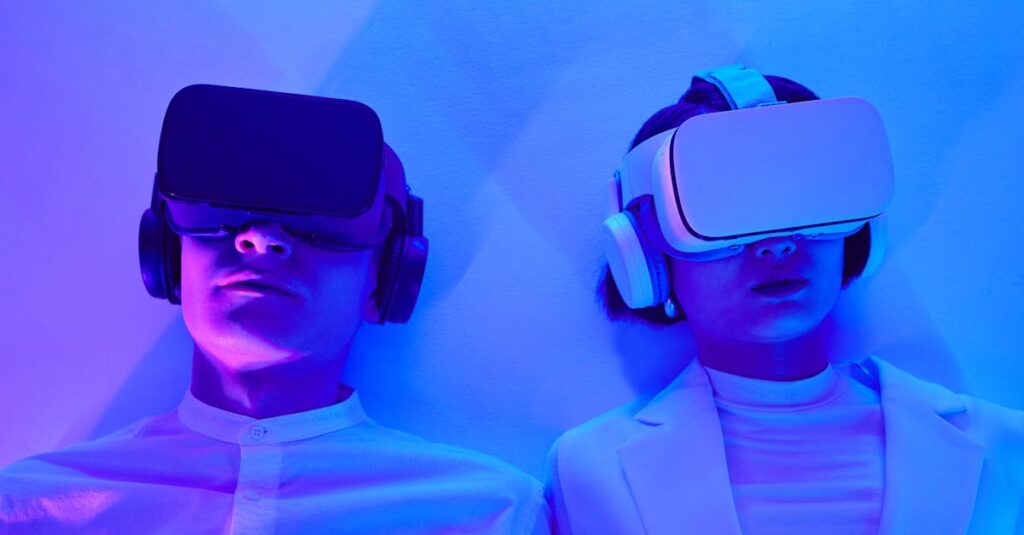
The integration of augmented reality with biohacking technologies creates immersive experiences for cognitive and physical optimization. These next-generation interfaces allow real-time visualization of physiological states and conscious modulation of biological responses through visual and auditory feedback.
Emerging immersive technologies include:
- Metabolic AR glasses: Real-time display of heart zones, hydration, and performance during exercise
- Adaptive VR meditation: Virtual environments adjusting to brain waves to deepen meditation
- Holographic biofeedback: 3D visualization of physiological parameters for heart coherence training
- Consumer brain-computer interfaces: Devices enabling application control through brain activity
- Embodied AI coaching: Virtual assistants analyzing body language and biomarkers for personalized advice
- Adaptive environments: Physical spaces automatically adjusting according to detected physiological state
This technological convergence transforms biological optimization into an interactive experience, making the invisible visible and enabling conscious control of automatic processes.
Security, ethics, and future perspectives
Challenges of biological data privacy
The proliferation of biohacking technologies generates considerable volumes of sensitive physiological data, raising major concerns about the privacy and use of this information. These biological data, more intimate than traditional digital data, require enhanced protections against misuse by insurers, employers, or malicious entities.
The technological convergence of biohacking creates complex security challenges requiring increased vigilance. Biometrics data hacking represents a growing threat with the potential theft of genetic fingerprints, heart patterns, or unique physiological signatures that cannot be changed. Behavioral surveillance insidiously uses health data for profiling, discrimination, or manipulation of individuals. The industry develops non-consensual monetization practices by selling sensitive biological data to pharmaceutical or insurance industries. Technical vulnerabilities of connected devices create security flaws allowing espionage or sabotage of wearables. The inherent permanence of biological data poses a unique challenge since it remains impossible to “change” biomarkers unlike traditional passwords. Algorithmic evolution now enables sophisticated predictive inferences to anticipate future diseases, creating risks of preemptive discrimination by insurers or employers.
Protecting this data requires specific regulations, advanced encryption, and personal digital sovereignty allowing individuals to fully control their biological information.
Regulation and standardization of technologies
The rapid expansion of biohacking technologies requires a regulatory framework balancing innovation and user safety. Health authorities are developing standards to guarantee the effectiveness, safety, and quality of biohacking devices, while preserving access to innovation for advanced users.
The development of regulatory initiatives is gradually transforming the biohacking ecosystem towards greater maturity. Certification of medical wearables is intensifying with stricter FDA and CE standards for all devices measuring critical health parameters. Scientific validation protocols now demand robust clinical evidence before any performance or health benefit claims. The industry is developing cybersecurity standards specific to connected devices to effectively protect sensitive user data. Ethical guidelines frame self-experimentation by defining responsible and safe biohacking practices. Data interoperability is progressing with the establishment of standards allowing secure and fluid transfer between different platforms. Professional training programs are expanding to accompany massive technological adoption in preventive health.
This evolving regulation aims to create a trusted ecosystem where technological innovation and user safety coexist harmoniously.
Practical guide to adopting biohacking technologies
Integrating biohacking technologies into your daily life requires a progressive and methodical approach. Start by identifying your specific optimization goals, evaluate technologies suited to your level and budget, then gradually implement tools while analyzing their impact on your biomarkers and performance.
Recommended adoption steps:
- Establish the baseline: Measure current parameters before technological introduction
- Start simple: Begin with a basic wearable (connected watch, activity tracker)
- Analyze data: Understand personal patterns before adding complex tools
- Specialize progressively: Add targeted devices according to identified goals
- Integrate the ecosystem: Connect tools to have a holistic view
- Continuously optimize: Adjust practices according to technological novelties
Biohacking technologies radically transform our ability to understand and optimize our biology. By combining wearables, artificial intelligence, and neurostimulation devices, you obtain a personal laboratory to multiply your performances. Explore these innovations with discernment: validate scientifically, protect your personal data, and transform your biological potential through the technological revolution of biohacking.