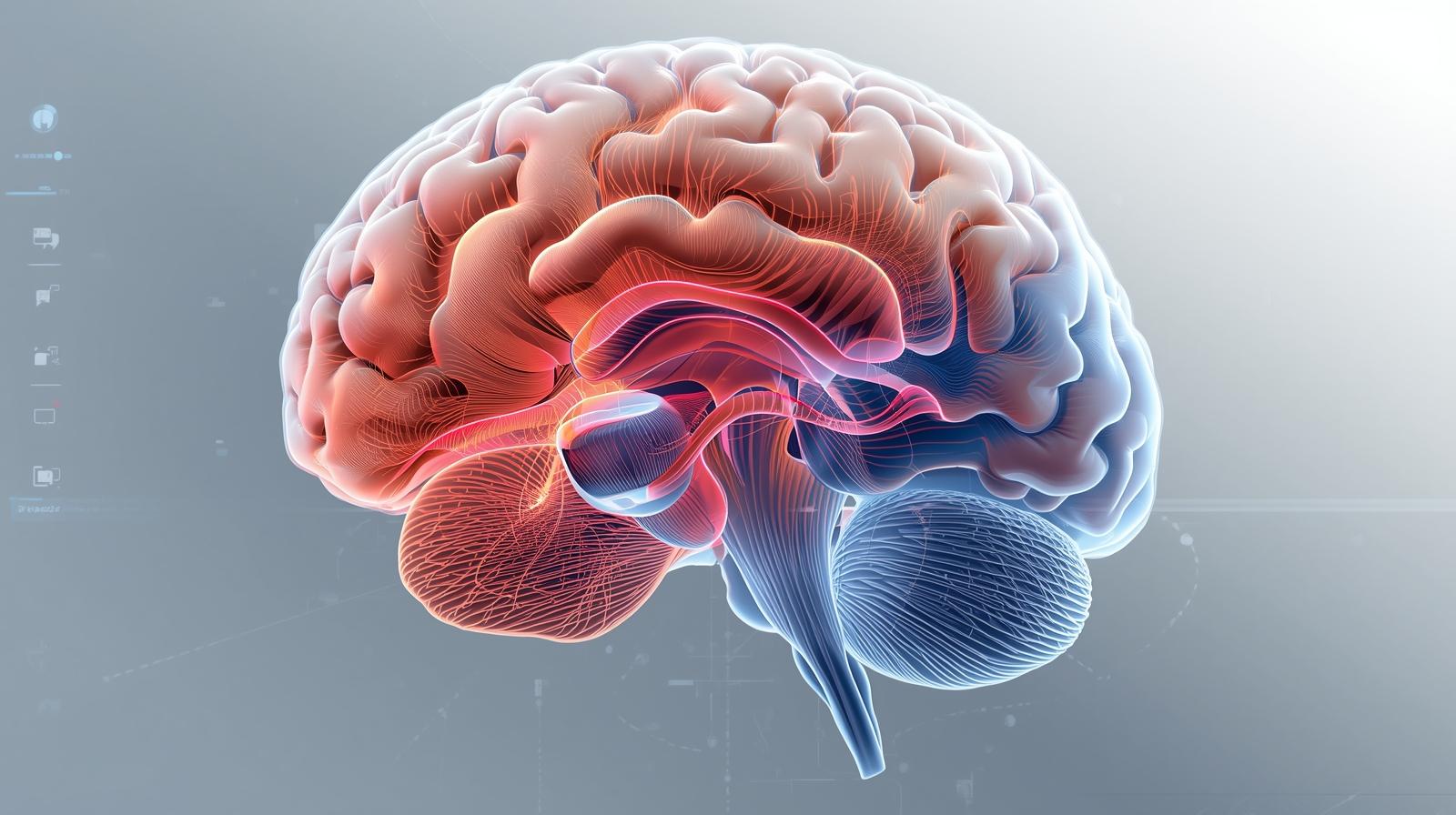
Why do you feel this adrenaline rush when faced with danger? How does your brain instantly detect a threat even before you become aware of it? At the heart of these reactions lies the amygdala, a small brain structure that orchestrates your emotional responses. This almond-shaped brain region plays a fundamental role in managing fear, anxiety, but also in recognizing pleasure and forming your emotional memories. Discover how this invisible sentinel influences your daily life, from ancient survival mechanisms to the implications in modern anxiety disorders, to better understand your reactions to life’s challenges.
Summary
- The cerebral amygdala: anatomy and location
- The functioning of the amygdala: your emotional alert system
- The main functions of the amygdala
- The amygdala and emotional disorders
- Practical applications and therapeutic perspectives
The cerebral amygdala: anatomy and location
The amygdala, also called the amygdaloid complex or amygdaloid body, is an essential structure of the human brain. Located in the anterior region of the temporal lobe, within the limbic system, this brain area derives its name from its characteristic shape resembling an almond. This morphological resemblance earned it its name, derived from the ancient Greek “amugdalê” meaning almond.
Contrary to what its singular name might suggest, we actually have two symmetrical amygdalae, one in each cerebral hemisphere. Each amygdala is composed of at least 13 distinct nuclei that together form a highly specialized network. This complex organization enables the amygdala to simultaneously process different types of sensory and emotional information.
The structure in three functional groups
The amygdaloid complex is organized into three main groups of nuclei, each having specific functions in processing emotions and behaviors:
- The basolateral group: connected to the cerebral cortex, particularly the prefrontal cortex, this group links sensory information to emotional responses and actively participates in forming emotional memory
- The corticomedial group: closely linked to the olfactory bulb and hypothalamus, it processes olfactory information and regulates social and reproductive behaviors
- The central group: connected to the brainstem and hypothalamus, it triggers physiological reactions to intense emotions such as increased heart rate or the fight-or-flight response
This sophisticated architecture makes the amygdala the brain region with the greatest number of connections to other brain areas, allowing it to rapidly receive and process a multitude of information to generate appropriate responses.
The functioning of the amygdala: your emotional alert system
The amygdala functions as a true emotional monitoring center constantly evaluating your environment. It continually receives sensory information that it assesses, decoding stimuli to guide and dictate behavioral reactions. This process occurs at a remarkable speed, often before your consciousness has fully analyzed the situation.
Processing sensory information
The basolateral part of the amygdala directly receives visual, auditory, tactile, and gustatory information from cortical structures, while the central nuclei capture olfactory information. This sensory diversity allows the amygdala to build a comprehensive assessment of each encountered situation.
When this information is analyzed as potentially dangerous or relevant for your survival, the amygdala immediately activates communication pathways to the hypothalamus and brainstem. These connections then trigger automatic responses of the autonomic nervous system: increased heart rate, pupil dilation, heightened alertness, or muscular preparation for action.
The two pathways of emotional processing
The brain processes emotional information via two distinct circuits that work together to ensure your safety:
- The short circuit (fast pathway): sensory information goes directly from the thalamus to the amygdala, allowing an almost instantaneous reaction to a potential danger, without detailed conscious analysis
- The long circuit (slow pathway): information passes through the cerebral cortex before reaching the amygdala, allowing a finer and more rational evaluation of the situation
This dual processing pathway explains why you might startle violently before realizing it was just a harmless shadow. The fast circuit protects you by triggering an immediate reaction, while the slow circuit then allows you to calmly reassess the situation.
The main functions of the amygdala

The amygdala is involved in a much broader variety of cognitive and emotional functions than its traditional role as the “fear center”. Recent research shows that the amygdala both determines what is in our immediate environment and what we will do in response to that information.
Fear management and defensive responses
The essential function of the amygdala is to decode stimuli potentially threatening to the organism. It orchestrates defense reactions according to two main modalities:
- Freezing: when the danger is distant, the amygdala can trigger a freezing behavior, an ancestral strategy to go unnoticed by a predator
- Active avoidance: when the danger is close, the basolateral amygdala collaborates with the prefrontal cortex to trigger a flight reaction
Studies show that the emotions most strongly activating amygdala activity follow this order: fear, disgust, humor, sexual emotion, sadness, then anger. This hierarchy reflects the evolutionary importance of each emotion for survival.
Emotional value attribution
Beyond threat detection, the amygdala assigns a survival value to encountered stimuli, whether positive or negative. It thus participates in reward recognition and contributes to your daily decisions: which people to approach, which situations to avoid, which choices to prioritize.
This evaluation function explains why some experiences become powerful emotional memories. The amygdala marks significant events with an emotional imprint that facilitates their long-term memorization.
Emotional memory and learning
The amygdala plays a central role in the formation and storage of emotional memory. It encodes associations between neutral stimuli and emotional experiences, a process called emotional conditioning.
Imagination alone can activate the amygdala in humans: simply stating that a dog is dangerous, for example, can generate apprehension, and through repetition, this association eventually establishes itself durably in the amygdala. This mechanism explains how certain phobias or prejudices develop without direct negative experience.
Vigilance and novelty detection
Recent research reveals that the amygdala regulates the overall level of vigilance and detects novelties in the environment, ensuring a general attention function. This ability allows you to instantly notice an unusual change in your environment, even when your conscious attention is focused elsewhere.
| Function | Involved mechanisms | Concrete manifestations |
|---|---|---|
| Threat detection | Rapid analysis of sensory stimuli via the short and long circuits | Startle reaction, instinctive avoidance, increased vigilance toward potential dangers |
| Physiological responses | Activation of the hypothalamus and brainstem | Accelerated heart rate, sweating, pupil dilation, muscle tension, adrenaline release |
| Emotional memory | Consolidation of associations between stimuli and emotions | Memorable emotional event memories, development of phobias or lasting preferences |
| Value attribution | Evaluation of positive or negative stimulus relevance | Attraction to rewards, avoidance of punishments, guidance of daily choices |
| Social regulation | Connections with the prefrontal cortex and hypothalamus | Recognition of others’ emotions, adaptation of social behaviors, emotional empathy |
| Vigilance and attention | Continuous environmental monitoring and novelty detection | Reaction to unexpected changes, maintaining an alertness level adapted to situations |
The amygdala and emotional disorders
Dysfunction of the amygdala is closely linked to several psychiatric and emotional disorders. Understanding these links opens therapeutic perspectives to improve the quality of life of affected individuals.
Anxiety disorders and amygdala hyperreactivity
Amygdala activation is believed to be exaggerated in individuals suffering from anxiety, depression, social phobia, or post-traumatic stress disorder. This hyperreactivity results in an excessive evaluation of threats in the environment, turning ordinary situations into sources of disproportionate worry.
Very early psychological traumas can mark the amygdala during brain maturation, disturbances that may be permanent. This sensitization of the amygdala explains why some people develop intense anxious reactions to stimuli that others perceive as neutral.
Excessive avoidance in the absence of real threat is a characteristic marker of anxiety-related pathologies. The amygdala then maintains a permanent state of alert that exhausts psychological resources and significantly limits freedom of movement and action.
Amygdala lesions and behavioral consequences
Conversely, lesions of the amygdala cause a lack of fear recognition with dramatic psychosocial consequences, making social judgments impossible. People with bilateral amygdala lesions no longer perceive danger in facial expressions or potentially threatening situations, exposing them to significant risks.
These lesions can also lead to Klüver-Bucy syndrome, characterized by behavioral disinhibition, oral hyperactivity, visual recognition disorders, and behavioral sexual changes. This syndrome illustrates the importance of the amygdala in regulating appropriate social behaviors.
Stress and hormonal regulation
The amygdala is sensitive to cortisol, the stress hormone, which is released in response to anxiety-inducing situations. This interaction creates a potentially vicious cycle: stress activates the amygdala, which stimulates cortisol production, which further sensitizes the amygdala. Breaking this cycle represents a major therapeutic challenge in treating chronic anxiety disorders.
Aggressiveness and emotional regulation
The amygdala also plays a crucial role in modulating aggressiveness. Studies have shown that excessive amygdala activity correlates with aggressive behaviors, while its surgical removal significantly reduces aggressiveness in previously violent individuals. This discovery underscores the importance of the amygdala in controlling intense emotional impulses.
Practical applications and therapeutic perspectives
In-depth understanding of the amygdala opens promising therapeutic avenues for treating emotional and behavioral disorders. These advances are gradually transforming the management of pathologies related to fear and anxiety.
Therapies targeting the amygdala
Several therapeutic approaches specifically aim to modulate amygdala activity:
- Exposure therapy: by gradually confronting patients with their fears in a safe context, this technique allows reconditioning of the amygdala and reduction of excessive anxiety reactions
- Cognitive and behavioral therapy: by modifying thoughts and behaviors, it indirectly influences amygdala activity via the prefrontal cortex
- Meditation and mindfulness: these practices reduce amygdala hyperactivity by strengthening emotional regulation through prefrontal areas
Research has shown that the brain has an internal system allowing reduction of fear levels, notably thanks to oxytocin which shows a positive influence on hyperanxiety. This discovery opens perspectives for targeted pharmacological treatments.
Neuroscience and behavioral prediction
Artificial intelligence now makes it possible to predict an individual’s behavior in a negative emotional situation based on real-time brain activity. These technological advances could allow the development of tools for real-time regulation of neuronal changes associated with pathological anxiety.
Biomarkers and diagnosis
Several biomarkers are associated with the amygdala: its functional connectivity with other brain regions, its volume (people with anxiety disorders tend to have larger amygdalae), and levels of neurotransmitters like dopamine, norepinephrine, and serotonin. These markers help refine diagnosis and personalize treatments.
Practical stress management in daily life
Understanding how the amygdala functions allows you to adopt concrete strategies to better manage your emotional reactions:
- Practice deep breathing to activate the parasympathetic nervous system and counterbalance amygdala activation
- Develop awareness of your emotional triggers to anticipate and regulate amygdala reactions
- Cultivate positive emotional experiences to balance negative associations stored in amygdala memory
- Maintain regular physical activity which reduces amygdala hyperreactivity to stress
- Prioritize quality sleep, essential for optimal emotional regulation
Future perspectives
Current research explores increasingly targeted interventions, including deep brain stimulation, non-invasive neurostimulation, and gene therapies. These discoveries open new avenues to treat patients with anxiety disorders by directly targeting the originating brain regions.
The amygdala remains a dynamic research field where each discovery enriches our understanding of emotional mechanisms and opens new therapeutic possibilities. This small almond-shaped structure, a true conductor of your emotions, profoundly influences your daily life, from instinctive reactions to your most complex decisions.
Understanding the role of the amygdala allows you to better grasp your emotional reactions, identify the underlying mechanisms in anxiety disorders, and adopt suitable strategies to effectively regulate your emotional life. This knowledge constitutes a first step toward better mastery of your emotions and an improvement of your psychological well-being on a daily basis.