Aging is a universal process, but imagine being able to influence how your cells renew and protect themselves over time. Spermidine, a natural molecule present in your body and in many foods, activates a cellular cleaning mechanism called autophagy, allowing your cells to eliminate damaged components and regenerate. As you age, spermidine levels in your body naturally decrease, but recent studies show that regular intake could help you age more healthily. Discover in this article how this fascinating polyamine acts on your cardiovascular health, brain, and longevity, and how to incorporate it into your daily diet.
Summary
- What is spermidine and how does it work?
- The benefits of spermidine on health and longevity
- Food sources: where to find spermidine?
- Spermidine supplements: dosage and usage
What is spermidine and how does it work?
A natural molecule present in all living cells
Spermidine is a natural polyamine, a biological compound present in all cells of your body. First discovered in human semen in 1678 by the researcher Antonie van Leeuwenhoek, hence its name, it is actually present in all parts of your body: heart, brain, intestines, and many other organs. It is an essential compound for the proper functioning of your cells.
About one-third of the spermidine present in your body comes from your own cellular production and certain intestinal bacteria, while the remaining two-thirds are supplied by your diet. This molecule plays a fundamental role in processes of cellular growth, division, and differentiation, as well as in the stability of your DNA and the regulation of your gene expression.
The autophagy mechanism: the major cellular cleanup
The main power of spermidine lies in its ability to stimulate autophagy. Autophagy is a natural process by which your body gets rid of damaged cells and makes way for renewed and healthier cells. Think of this mechanism as a recycling team that cleans your cellular house: it eliminates toxic waste, malformed proteins, and worn components, then recycles them to create new elements.
With age, autophagy loses efficiency, leading to an accumulation of damaged cells and increasing the risk of age-related diseases such as cardiovascular disorders or dementia. By activating this cellular cleaning program, spermidine helps your cells stay fresh and functional longer.
Beyond autophagy, spermidine participates in a wide variety of phenomena promoting health: maintaining the function and number of mitochondria (the powerhouses of your cells), preserving the length of telomeres that protect the ends of your chromosomes, and protection against oxidative stress.
The benefits of spermidine on health and longevity
A powerful ally for longevity and healthy aging
Scientific research on spermidine reveals impressive results regarding human longevity. A study conducted by an international team of scientists from the Medical University of Innsbruck followed 829 people aged 45 to 84 over 20 years. The results are eloquent: people with a diet rich in spermidine had a 15% lower risk of death and lived 5 to 7 years longer than those with a diet poor in spermidine.
Spermidine acts as a cellular rejuvenation agent by promoting autophagy, cellular renewal, and the natural detoxification of the body. This process allows to slow down aging by preserving the quality and health of your cells in the long term.
Cardiovascular protection and heart health
Studies have shown that high amounts of spermidine protect against vascular diseases. Spermidine exerts several beneficial effects on your cardiovascular system. It lowers blood pressure, improves the flexibility of cardiac tissue, and reduces arterial stiffness by enhancing endothelial function.
These protective effects are explained by several mechanisms: spermidine improves the bioavailability of nitric oxide (a compound that dilates your blood vessels), exerts an antioxidant function, and blocks the production of pro-inflammatory substances. By supporting autophagy in heart cells, it enables your heart and blood vessels to function properly and resist age-related degeneration.
Support for cognitive functions and brain health
Spermidine improves brain health by promoting neuronal plasticity and protecting neurons. It maintains the function and number of mitochondria in the brain, these powerhouses essential for your neurons’ proper functioning.
Spermidine could in the future be an adjunct treatment for Alzheimer’s disease, as it targets processes that seem to trigger the onset of the disease. It also reduces T lymphocyte activation, lessening autoimmune reactions linked to neuronal demyelination processes. The long-term study also showed that spermidine protects against nervous system diseases.
Other health benefits
| Health domain | Main effects | Mechanisms of action |
|---|---|---|
| Longevity and aging | Increase of life expectancy by 5 to 7 years, 15% reduction in risk of death, slowing of cellular aging | Activation of autophagy, DNA protection, telomere maintenance, reduction of oxidative stress |
| Cardiovascular health | Reduction of blood pressure, improvement of heart function, reduction of arterial stiffness | Improvement of nitric oxide bioavailability, antioxidant effect, anti-inflammatory action |
| Brain health | Neuronal protection, improvement of neuronal plasticity, prevention of cognitive decline | Maintenance of brain mitochondria, reduction of neuroinflammation, stimulation of neuronal autophagy |
| Cellular health | Cellular renewal, elimination of damaged components, improvement of mitochondrial function | Activation of autophagy process, recycling of defective proteins, protection against oxidative stress |
| Immune system | Reduction of chronic inflammation, modulation of immune responses, protection against infections | Regulation of T lymphocytes, decrease of pro-inflammatory cytokines, support of cellular immunity |
Spermidine reduces inflammation, which helps prevent many chronic diseases. It also protects your DNA against damage linked to oxidative stress and stabilizes mitochondrial DNA, thereby safeguarding you against aging caused by genetic mutations.
Food sources: where to find spermidine?

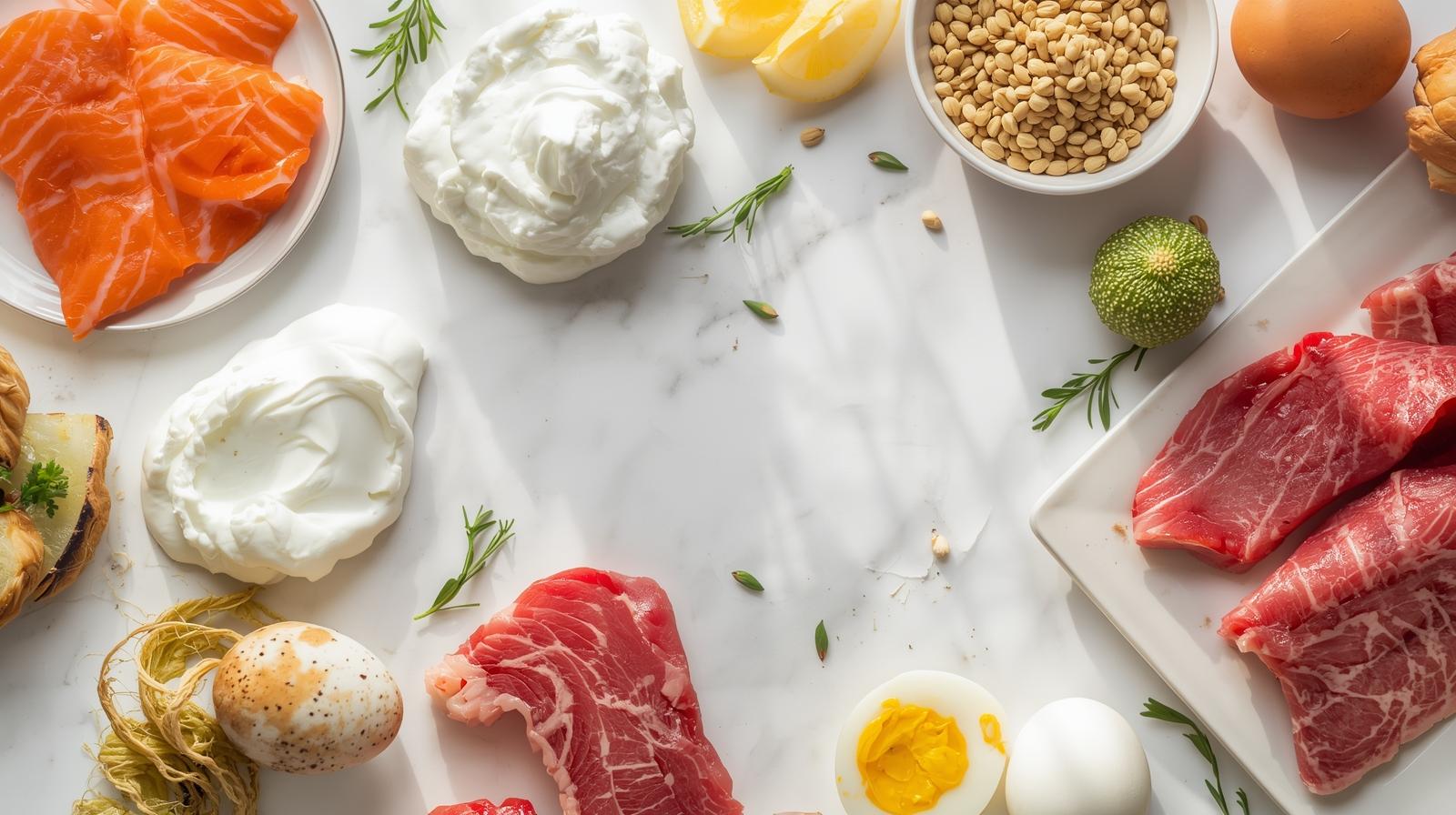
Spermidine champions: the richest foods
Wheat germ contains the largest amount of spermidine among all foods, making it essential to increase your intake. You can incorporate it into your diet as a powder to sprinkle on your yogurts, smoothies, or salads.
Here are the best food sources of spermidine categorized by groups:
Cereals and grains
- Wheat germ (most concentrated source)
- Rice bran and black rice
- Quinoa and oats
- About 30% of total spermidine intake comes from wheat and whole grains
Legumes and soy
- Soy beans, tofu, and tempeh
- Fermented soy products such as natto and miso
- Chickpeas (garbanzo beans)
- Lentils and beans
Cheeses and dairy products
- Aged cheeses such as cheddar, brie, parmesan, gorgonzola, and gouda
- The aging process of cheeses allows the development of higher spermidine concentrations
Mushrooms
- Shiitake, oyster mushrooms, and snow mushrooms
- Maitake mushrooms
Fruits
- Mango (3 mg of spermidine per 100g)
- Apples, bananas, pears, and peaches
- Orange and grapefruit
Vegetables
- Cauliflower and broccoli (about 2.5 mg per 100g)
- Green bell pepper, pumpkin
- Spinach, celery, and lettuce
Oleaginous seeds
- Hazelnuts (2.1 mg per 100g)
- Walnuts and pine nuts
Beverages
- Green tea (rich in spermidine and spermine)
- Orange juice
The Mediterranean diet: a natural approach rich in spermidine
The Mediterranean diet, which promotes longevity, naturally contains many foods rich in spermidine. A Mediterranean diet rich in fruits, vegetables, whole grains, and olive oil is an excellent source of spermidine.
To maximize your spermidine intake through food, favor a varied and balanced diet including daily whole grains, legumes, mushrooms, green vegetables, and fresh fruits. Add wheat germ to your preparations, regularly consume fermented soy products, and don’t hesitate to enjoy aged cheese in moderation.
Spermidine supplements: dosage and usage
Why consider supplementation?
With age, the body produces less and less spermidine, hence the interest in consuming it as a dietary supplement. The amount of spermidine contained in foods may not be sufficient to achieve therapeutic effects, and bioavailability varies depending on the preparation and individual absorption rates.
If you have difficulty maintaining a sufficiently varied diet or dislike certain foods rich in spermidine, supplementation based on need can be a wise alternative. Spermidine supplements offer the advantage of providing a controlled and standardized amount of active ingredient, unlike natural sources subject to strong variations.
Recommended dosage and available forms
There is currently no official recommendation regarding daily spermidine intake, but clinical studies suggest that an intake of 1 to 6 mg per day constitutes an ideal supplement. A 2023 study on 12 healthy volunteers used a dose of 15 mg per day orally, showing that supplementation significantly increases spermine levels in plasma.
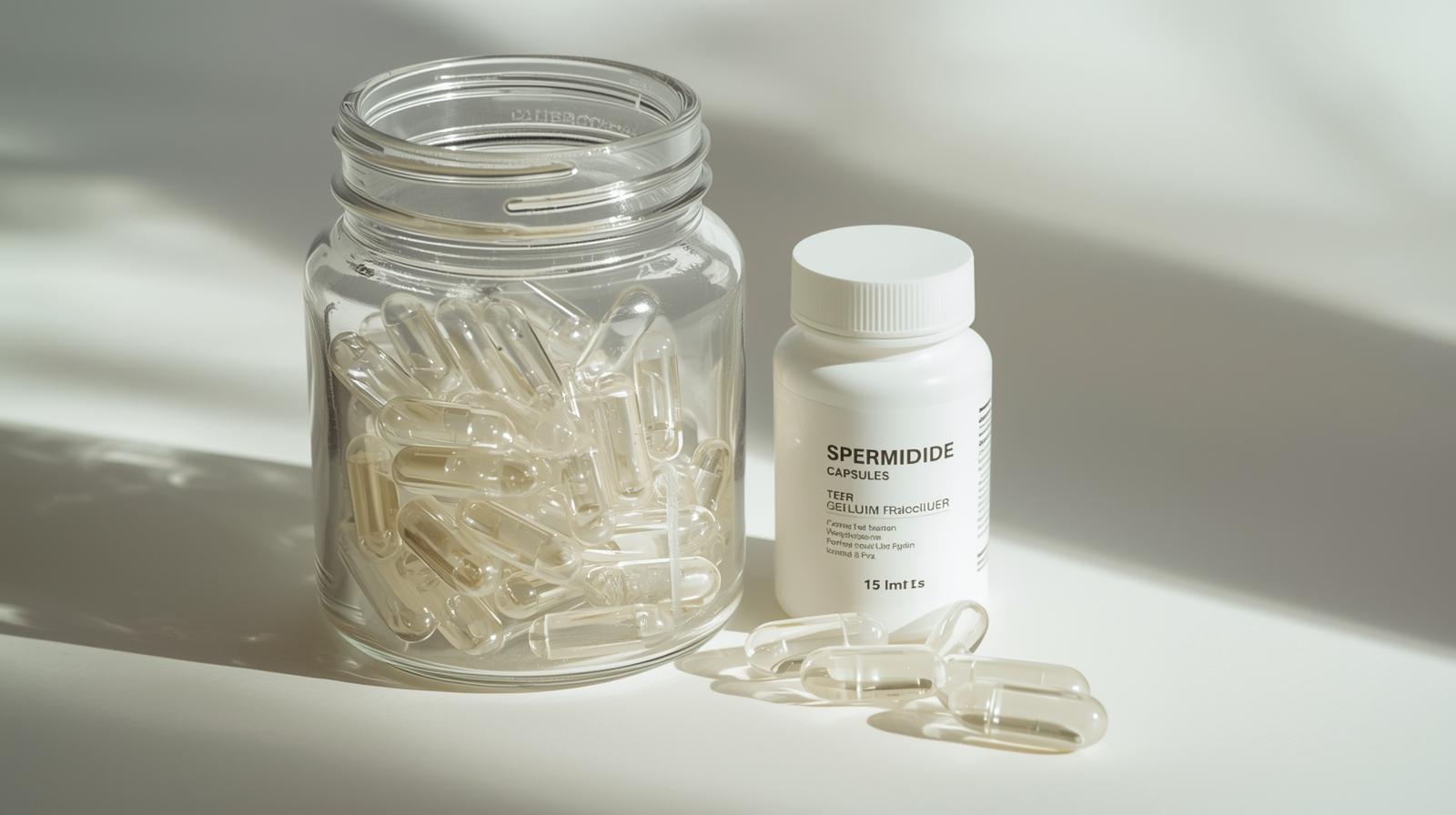
Spermidine supplements are available in several forms:
- Capsules: the most common and convenient form
- Tablets: easy to dose
- Loose powder: can be mixed into drinks or foods
High-quality supplements offer a dose of 3 mg of spermidine per day, representing the highest rate on the market. Look for standardized products, often composed of rice extract or wheat germ, 100% vegan and free of unnecessary additives.
How to optimize absorption and effectiveness
To maximize the benefits of your spermidine supplementation, follow these practical recommendations:
- Start gradually: begin with the minimum recommended dose and increase gradually according to your tolerance
- Favor regularity: take your supplement daily at the same time to maintain stable levels
- Combine with a balanced diet: supplementation complements a healthy diet, it does not replace it
- Combine with other anti-aging practices: intermittent fasting, physical exercise, and good sleep also stimulate autophagy and amplify the effects of spermidine
Spermidine consumed through food or dietary supplements is rapidly absorbed by the intestine, meaning effects can appear relatively soon after ingestion.
Spermidine represents a natural and scientifically validated approach to support your cellular health and promote healthy aging. By activating autophagy, this essential cellular cleaning mechanism, it helps you keep your cells fresh and functional longer. Whether you choose to increase your intake through a diet rich in wheat germ, mushrooms, soy, and aged cheeses, or through controlled supplementation, spermidine offers measurable benefits for your longevity, cardiovascular health, and cognitive functions. Adopt a gradual and personalized approach, and transform your aging by prioritizing quality of life and cellular vitality in the long term.