Every second, your body produces billions of energy molecules without you having to think about it. This feat relies on tiny structures present in almost all your cells: the mitochondria. True microscopic energy factories, they transform the food you consume and the oxygen you breathe into energy usable by your body. Discover in this article how these essential organelles ensure your daily vitality, why their proper functioning is crucial for your health, and how to preserve their efficiency throughout your life.
Summary
- Mitochondria: definition and origin
- Structure and organization of mitochondria
- The essential functions of mitochondria
- Mitochondrial dynamics and its importance
- Mitochondrial diseases and their prevention
Mitochondria: definition and origin
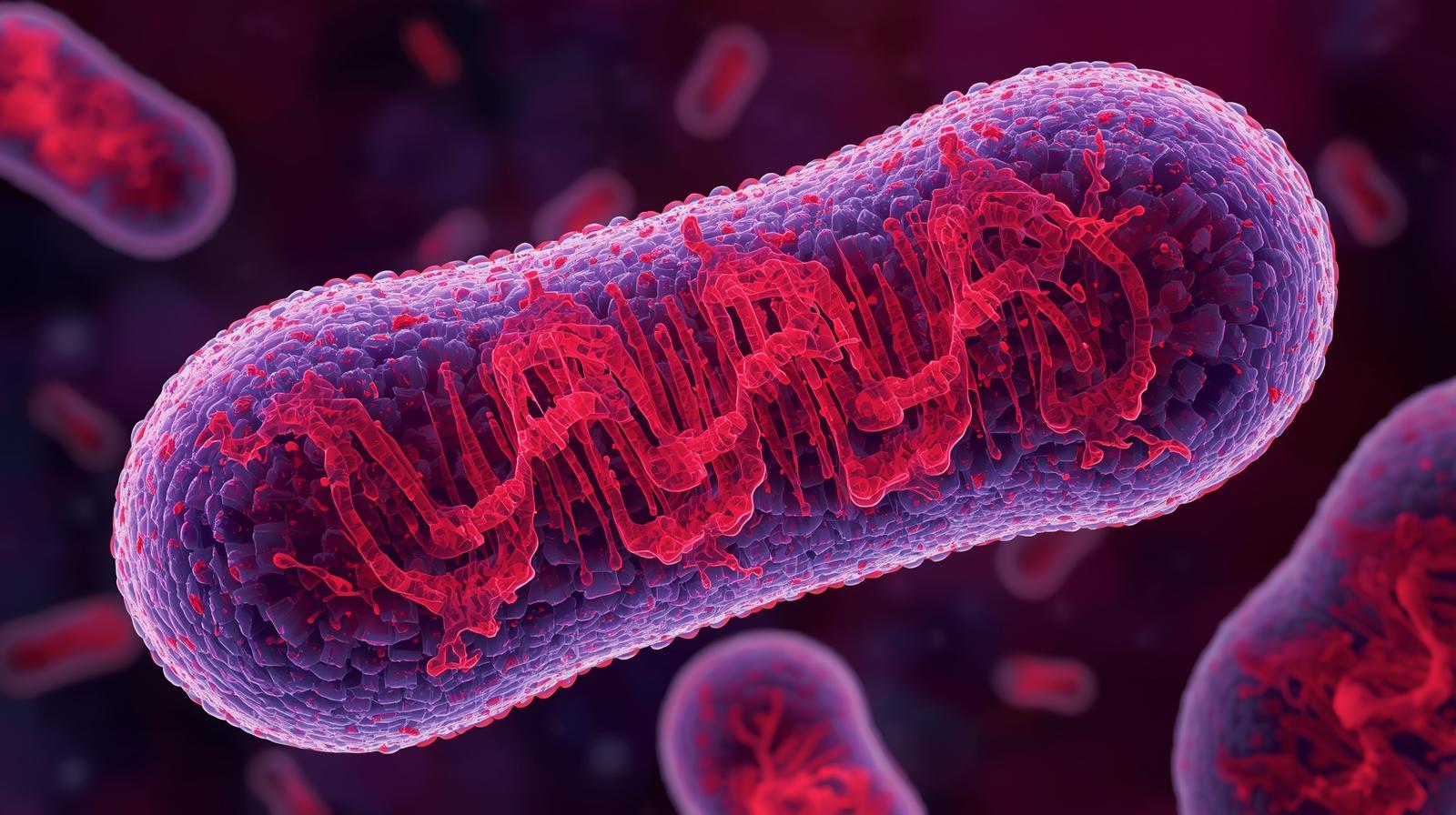
Mitochondria refer to cellular structures specialized in energy production in the form of ATP (adenosine triphosphate), a molecule that stores and releases the energy necessary for your body’s functioning. Present in almost all your cells, these organelles measure between 0.75 and 3 micrometers and resemble small oval capsules. Their number varies considerably according to the energy needs of tissues: your red blood cells contain none, while your muscle and liver cells can house more than 2,000 each.
What makes mitochondria particularly fascinating is their unique origin. The theory of endosymbiosis, widely accepted by the scientific community, explains that mitochondria are ancient bacteria that associated with primitive cells more than a billion years ago. This mutually beneficial collaboration evolved into an indispensable relationship: mitochondria retained their own DNA, distinct from that contained in the nucleus of your cells, and this mitochondrial DNA is transmitted exclusively from your mother.
Structure and organization of mitochondria
A complex architecture dedicated to efficiency
Mitochondria have a unique structural organization that maximizes their capacity to produce energy. They are bounded by two membranes stacked on top of each other: a smooth and permeable outer membrane thanks to proteins called porins, and an inner membrane that folds into numerous cristae to increase its surface area without increasing the organelle’s volume. This double membrane creates several specialized compartments that work in synergy.
The inner membrane houses the ATP production machinery, while the space between the two membranes allows the accumulation of ions necessary for the energy process. At the heart of the mitochondrion lies the matrix, a space filled with enzymes where the Krebs cycle takes place, a series of fundamental chemical reactions to extract energy from nutrients. This compartmentalized organization enables mitochondria to carry out complex chemical reactions with remarkable efficiency.
The mitochondrial genome and its particular role
Human mitochondrial DNA contains only 16,569 base pairs, a tiny size compared to the 3 billion base pairs of your nuclear DNA. Yet, this small genome plays a crucial role by coding for 13 proteins essential to energy production, as well as for 22 transfer RNAs and 2 ribosomal RNAs. Each mitochondrion contains several dozen copies of this DNA, grouped in structures called nucleoids that float in the matrix.
This exclusive maternal transmission of mitochondrial DNA has important implications. At fertilization, the sperm only contributes its nuclear DNA, not its mitochondria. Thus, all your mitochondria come from your mother, who herself received them from her mother, creating an unbroken mitochondrial genetic line tracing back through generations.
The essential functions of mitochondria
Cellular energy production
The primary function of mitochondria is to convert nutrients from your diet into ATP, the universal energy currency of your cells. This process, called cellular respiration, occurs in several steps and requires the oxygen you breathe. Mitochondria create over 90% of the energy your body needs to survive, producing approximately 70 kilograms of ATP per day in an average adult.
When you engage in physical activity or when you are cold, your mitochondria increase their ATP production to meet your body’s increased demands. This adaptive capacity is essential to maintain your vitality in various situations. Without oxygen supply, your cells can still produce a bit of energy by fermentation in the cytoplasm, but this alternative system is much less efficient and generates an accumulation of ions that causes fatigue after intense effort.
Beyond energy production
Mitochondria fulfill many other vital functions often poorly known. They actively participate in the storage and regulation of calcium in your cells, a crucial element for nerve signal transmission and muscle contraction. They also intervene in the transformation of fatty acids to produce energy and in the synthesis of certain hormones and neurotransmitters.
A particularly important role of mitochondria concerns apoptosis, the programmed cell death process. When a cell is damaged or becomes undesirable, mitochondria can trigger its controlled destruction to protect the organism. This mechanism allows your body to naturally eliminate between 50 and 70 billion cells each day, or nearly 2,000 cells per second, thereby maintaining the balance and health of your tissues.
| Cell type | Number of mitochondria | Main functions | Energy needs |
|---|---|---|---|
| Muscle cells | More than 2,000 per cell | ATP production for contraction, calcium regulation, adaptation to physical effort | Very high during physical activity, variable depending on effort intensity |
| Neurons | Several hundred | Energy supply to synapses, ATP transport along axons, regulation of nerve communication | High and constant, particularly important at neuron extremities distant from the cell body |
| Liver cells | More than 2,000 per cell | ATP production for detoxification reactions, fat metabolism, synthesis of biomolecules | Very high due to the multiple metabolic functions of the liver |
| Cardiac cells | About 5,000 per cell | Continuous ATP production for cardiac contractions, fatigue resistance, rhythm regulation | Extremely high and constant, the heart can never stop functioning |
| Red blood cells | None | Oxygen transport only, no mitochondrial energy production | Very low, energy produced by fermentation in the cytoplasm |
Mitochondrial dynamics and its importance
A constantly moving network
Mitochondria are not fixed structures within your cells. They exhibit a spectacular dynamic, capable of organizing into a gigantic interconnected tubular network or fragmenting into individual organelles depending on cellular needs. When your cells require a lot of energy, especially to prepare for cell division, mitochondria fuse together to optimize their efficiency. Conversely, under stress or just before division, they split apart to distribute more evenly.
This mobility is particularly crucial in polarized cells such as your neurons. Some neurons have extensions over one meter long in humans, and ATP produced in the cell body could never reach distant synapses by simple diffusion. Mitochondria therefore actively move along axons to deliver energy where it is needed, thus ensuring the proper functioning of your nervous system.
Fusion and fission to preserve health
The processes of mitochondrial fusion and fission are not only involved in distributing energy. They play an essential role in maintaining the quality of mitochondrial DNA. Due to their proximity to energy production, which generates reactive oxygen species, mitochondrial DNA undergoes about ten times more mutations than nuclear DNA. Over time, different DNA molecules within the same mitochondrion can accumulate distinct mutations.
Mitochondrial fusion allows the exchange of DNA molecules between mitochondria, creating a genetic complementation where healthy genes can compensate for defective ones. This protective mechanism allows your mitochondria to continue functioning normally even when they contain damaged DNA molecules. When this fusion process is impaired, mitochondria can lose their DNA and become unable to produce ATP, compromising cell survival.
Mitochondrial diseases and their prevention
Understanding mitochondrial diseases
Mitochondrial diseases, also called mitochondropathies, occur when mitochondria do not function properly. These pathologies present extremely varied symptoms depending on the affected organs, making their diagnosis complex. The most typical manifestations concern tissues with high energy demands: your muscles, your brain, and your heart. Patients may suffer from muscle weakness, neurological disorders, heart problems, or learning difficulties.
These diseases generally result from genetic mutations affecting energy production. The complexity lies in the fact that these mutations can affect either nuclear DNA or mitochondrial DNA itself. Currently, there is no curative treatment for mitochondrial diseases. Management mainly aims to alleviate symptoms through supplementation strategies with vitamins and cofactors, physiotherapy to maintain muscle function, and appropriate medical follow-up to improve quality of life.
Preserving your mitochondria’s health
Although some mitochondrial diseases are genetic in origin, you can adopt habits that promote the health of your mitochondria throughout your life. Regular physical activity stimulates the production of new mitochondria, a process called mitochondrial biogenesis, and improves their energy efficiency. A balanced diet rich in antioxidants helps to protect mitochondrial DNA against oxidative stress.
Maintaining quality sleep, managing stress, and avoiding environmental toxins also contribute to preserving mitochondrial function. Recent research suggests that certain dietary supplements such as coenzyme Q10, B vitamins, and magnesium could support mitochondrial health, although their effectiveness still requires thorough studies. The future of mitochondrial medicine is moving towards personalized approaches based on genetic analysis and gene therapy to correct dysfunctions.
Understanding the role of mitochondria in your body allows you to appreciate the importance of these microscopic energy plants. By producing the ATP that powers each of your cells, regulating vital processes, and constantly adapting to your body’s needs, mitochondria are a fundamental element of your health. Adopt lifestyle habits that support their proper functioning: your vitality and well-being directly depend on it.